
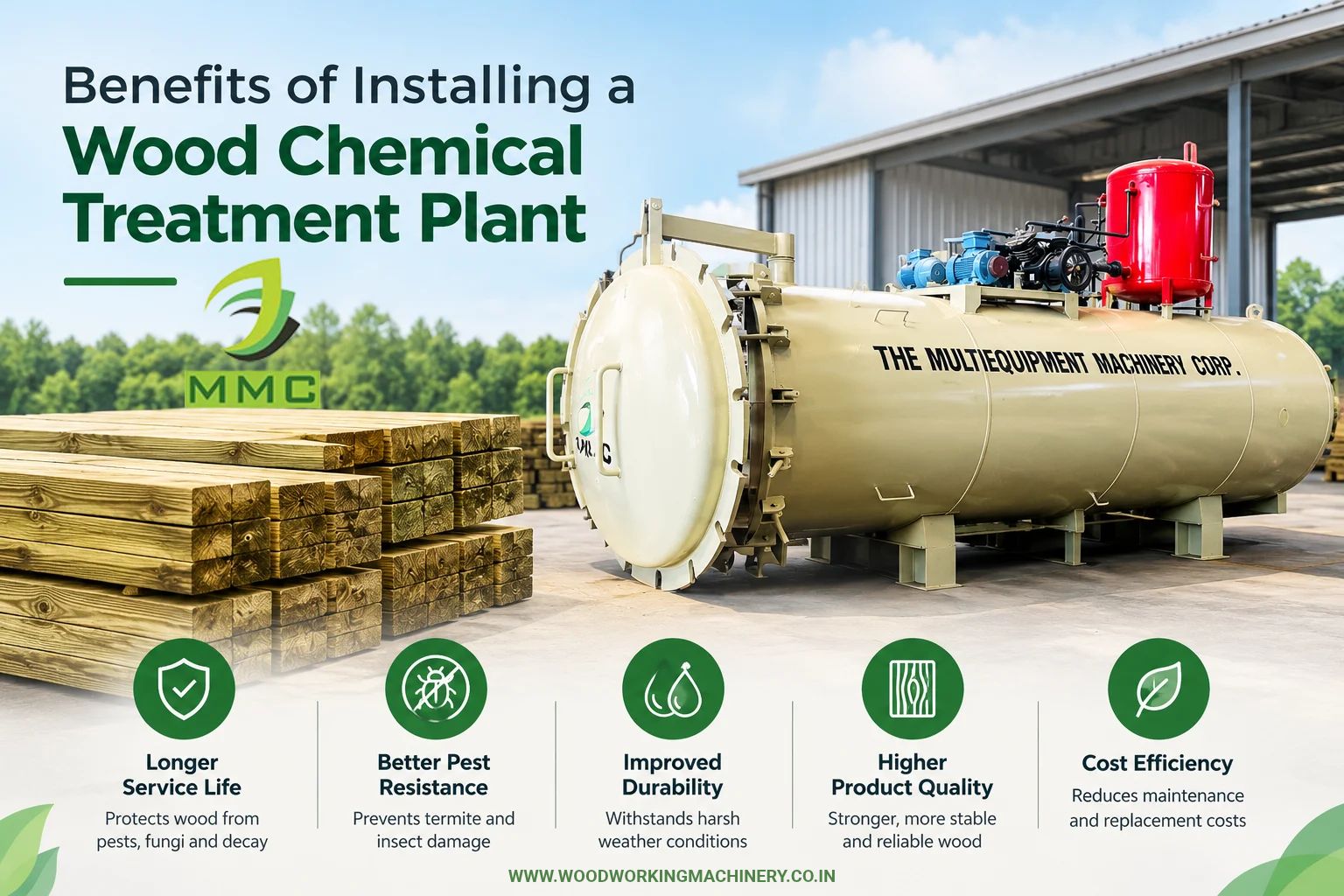
Though wood is used in different places, wood that is not treated is prone to attack from termites, fungus, and moisture and therefore becomes less durable and usable. The wood chemical impregnation treatment plant manufacturers are manufacturers of specialized machines intended to increase the durability of timber.
The wood chemical impregnation treatment plant manufacturers help Multi Equipment Machinery achieve high-quality wood, minimize wastage of the wood material, and provide consistency in the process.
What Is a Wood Chemical Treatment Plant?
This is an industrial method where preservatives appropriate for timber protection from biological organisms are employed. Based on the equipment used, the use of vacuum pressure ensures better penetration of the chemicals compared to simple surface treatments.
The procedure will depend on the wood variety, type of preservative, application, and desired level of protection.
Key Benefits of Installing a Wood Chemical Treatment Plant:
1. Biological and Environmental Protection:
- Termite and insect resistance: The correct wood preservatives provide termite resistance along with protection from other wood-boring insects.
- Fungal resistance: This process minimizes the chances of fungal attack on the wood in appropriate conditions.
- Outdoor resistance: Timber that is treated in an appropriate manner works well even outdoors, where appropriate treatment is necessary.
2. Better Wood Quality and Longer Service Life
- Increased lifetime: The chemical preservation process extends the useful life of the timber by limiting its biological degradation.
- Protection from water-induced damage: The timber is protected from certain dangers associated with moisture through the use of chemical preservatives.
- Maintenance of timber value: Improved protection will allow preserving the quality and usability of wooden products.
3. Operational and Commercial Efficiency
- Chemical penetration: The vacuum process leads to more effective penetration of chemicals than just surface coating of chemicals.
- Chemical handling: Chemicals can be handled effectively with the use of proper equipment.
- Consistent treatment quality: With pressure, vacuum, and controlled cycle treatments, the treatment quality remains the same for each treatment batch.
- Saving in replacement: Correct protection of wood ensures its long life.
4. Supports Business Growth
Setting up a wood treatment plant will enable firms to satisfy those customers who demand treated wood for building and other uses.
Firms will be able to optimize their production plan, cater to customers’ demands, and also discover new markets for business development through appropriate technology and processing capacity.
How to Choose the Right Wood Chemical Treatment Plant Manufacturer?
When investing, it is advisable to have these considerations:
- Plant capacity: Choose your equipment depending on the size of the logs and the number of production per day.
- Technology: Check if vacuum pressure treatment technology or other technologies can serve you well.
- Chemical recovery: Choose equipment that ensures efficiency in the management of chemicals.
- Safety: Check if the equipment satisfies the pressure vessel and chemical regulation requirements.
- After-sales support: Choose equipment from manufacturers who provide installation and maintenance services.
Conclusion:
Building a chemical treatment plant for the wood is one of the key strategies of improving the quality of the wood, which makes sure there is consistency in the quality of the wood, hence preventing losses of material resources. Collaborating with a reliable wood chemical impregnation treatment plant manufacturer such as Multi Equipment Machinery would be crucial for you in this case.
Frequently Asked Questions:
- Do wood treatments work?
Yes, treating the wood properly protects it from being eaten up by termites and other organisms. - How long will wood treatment take?
Wood treatment will last for several years depending on the type of preservative used, mode of treatment, the type of wood, and the environment. - What are the side effects of wood treatment?
Wood treatment may have eye and skin irritation effects, as well as respiratory complications due to the preservatives used. - What is the chemical treatment of wood?
The application or impregnation of wood using preservatives to prevent wood from decay and pest is chemical treatment of wood.